From Data to Decision: How to Turn AI Interview Reports into Your Hiring Superpower
Ever feel like you’re searching for a needle in a haystack of resumes? You’re not alone. With 42% of talent acquisition professionals citing their biggest challenge as screening candidates from a massive applicant pool, the pressure is immense. The average hire takes up 13 hours of a recruiter’s time, much of it spent on repetitive screening calls that yield inconsistent notes and rely heavily on gut feelings.
But what if you could transform that mountain of data into a clear, actionable roadmap to your next great hire? That’s the promise of AI-powered interview reports. They aren’t just transcripts; they’re your key to making faster, fairer, and more confident decisions.
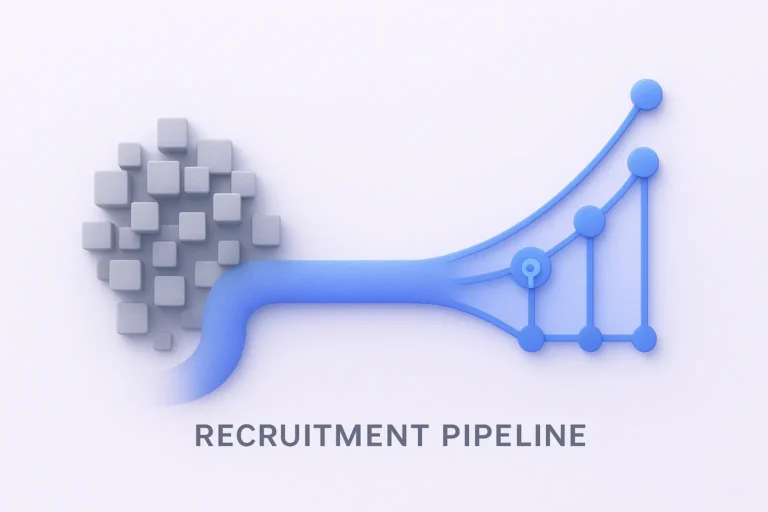
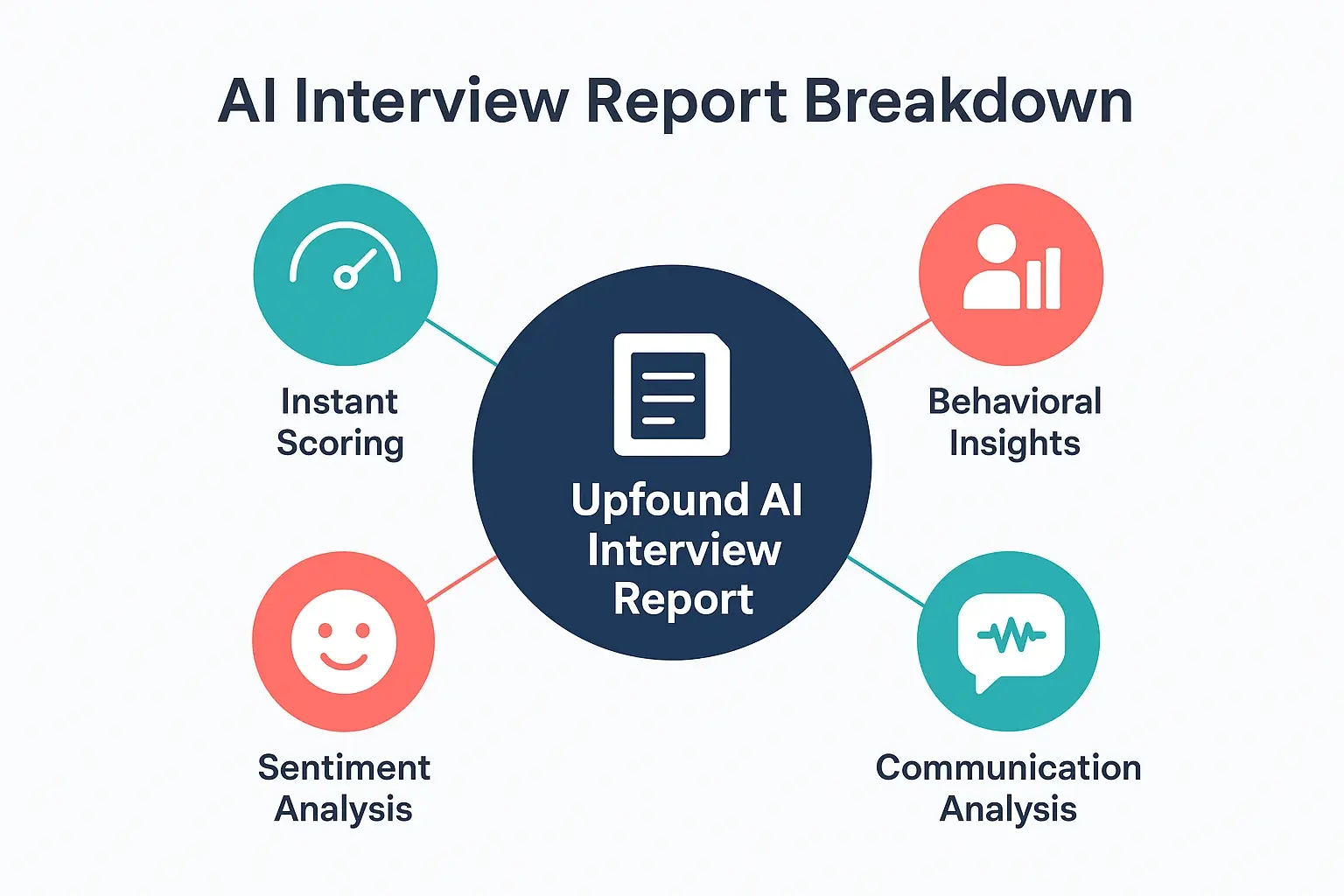 This visual breaks down the key elements of an Upfound AI interview report, helping recruiters identify actionable data points for making informed hiring decisions.
Beyond the Transcript: Understanding Your New Toolkit
At first glance, an AI interview report might seem like a simple summary. But its real value lies in the structured, objective data it provides. Think of it less as a meeting transcript and more as a performance dashboard for each candidate.
Key components you’ll often find in AI interview reports include:
- Overall Score: A high-level metric that instantly ranks candidates based on predefined criteria.
- Skill-Specific Scores: A breakdown of how well a candidate’s answers align with core competencies like “Problem-Solving,” “Team Collaboration,” or “Technical Knowledge.”
- Communication Analysis: Insights into a candidate’s clarity, confidence, and articulation, detached from subjective human bias.
- Keyword Relevance: Identification of key terms and concepts from their responses that match the job description.
This structure is critical. Research has shown that structured interviews are twice as effective at predicting job performance as unstructured ones. AI simply provides that structure consistently and at scale.
Shifting from Gut Feel to Data-Backed Confidence
The traditional screening process is often filled with unconscious bias and inconsistent feedback. One interviewer might love a candidate’s energy, while another finds them unfocused. This subjectivity makes it difficult to compare candidates fairly.
AI reports remove that guesswork. By providing the same questions and using the same scoring model for every candidate, they create a level playing field. Your job shifts from trying to remember who said what to strategically analyzing objective data.
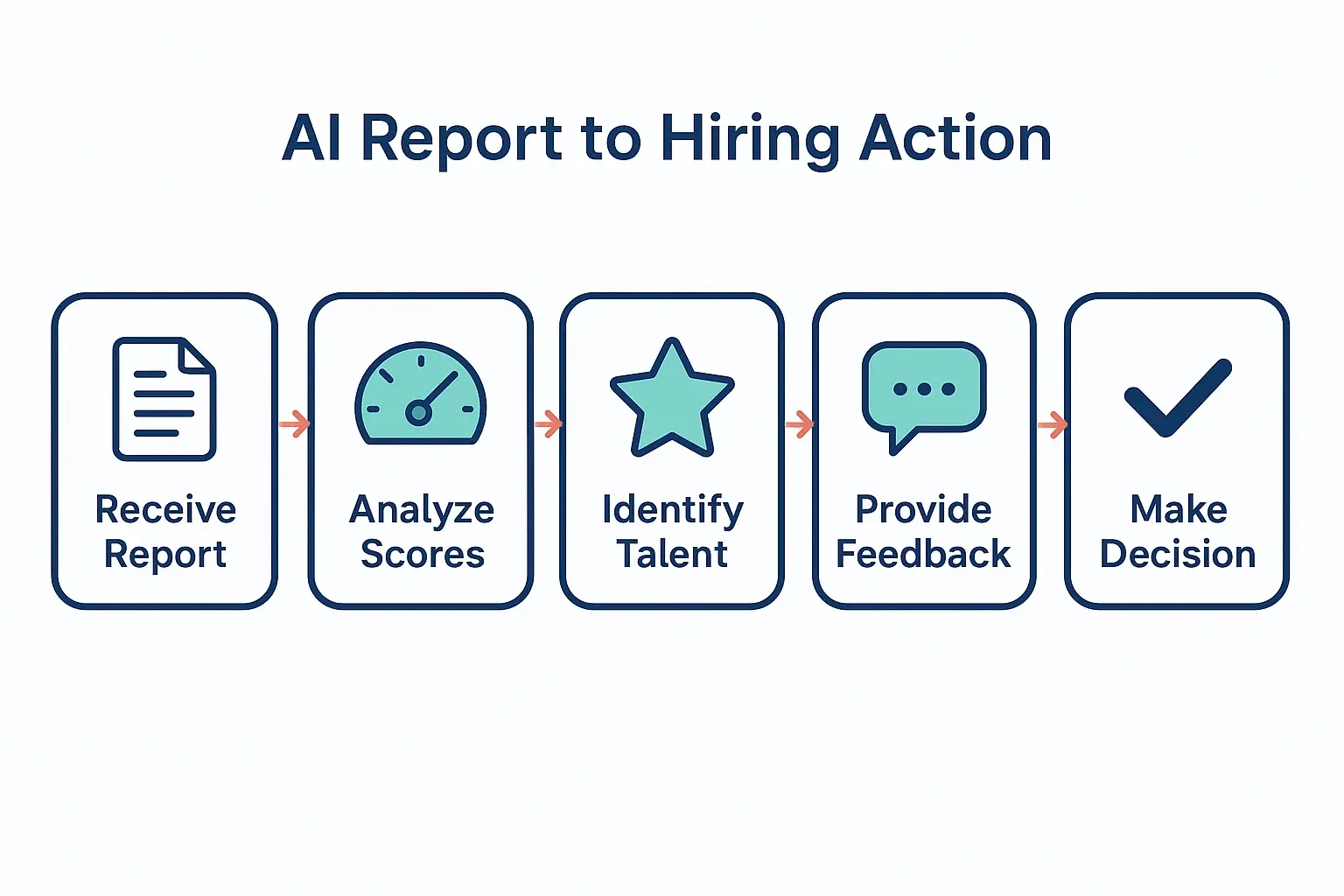 This process flow guides recruiters through interpreting AI interview reports and applying insights to objective hiring actions, ensuring data-driven decision-making.
Here’s how to put that data into action:
1. Standardize Your First Pass
Use the overall score to create your initial shortlist. Instead of manually reading every resume or conducting dozens of 15-minute calls, you can instantly see the top 10-20% of applicants who meet the fundamental criteria. This step alone can reclaim hours from your week.
2. Compare Apples to Apples
Once you have your shortlist, dive into the skill-specific scores. Let’s say you’re hiring a project manager. You can compare Candidate A’s “Leadership” score directly against Candidate B’s. This objective comparison is a powerful tool for mitigating unconscious bias, ensuring you advance candidates based on merit, not just a “good feeling.”
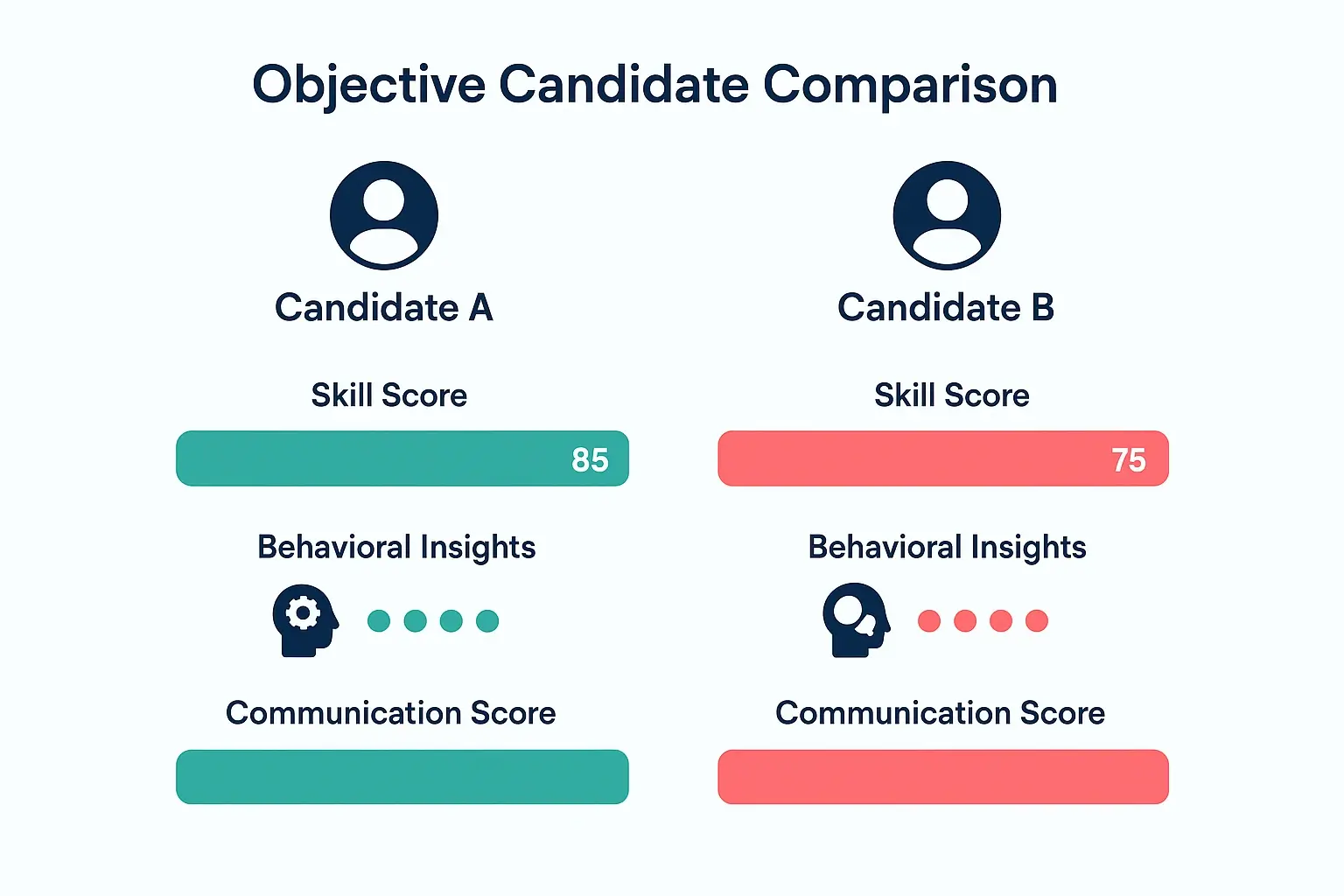 This comparison grid helps recruiters objectively evaluate candidates side-by-side using Upfound AI’s scoring, supporting unbiased and data-driven hiring decisions.
3. Craft Consistent Feedback for Hiring Managers
Stop delivering vague feedback like, “I got a good vibe from them.” Instead, present hiring managers with concrete data points: “Sarah scored in the 95th percentile for ‘Technical Expertise’ and gave three clear examples of how she implemented our primary software stack.” This empowers managers to make better-informed decisions for second-round interviews.
The result? A streamlined process that helps you boost hiring efficiency. In fact, 81% of companies using AI in recruitment report a significant increase in their overall hiring effectiveness.
Frequently Asked Questions
Can AI truly understand the nuance of a conversation?
Modern AI is designed to analyze language for context, relevance, and key concepts, not just keywords. While it doesn’t “understand” in a human sense, it excels at identifying patterns and matching responses against predefined criteria for a specific role, providing a consistent baseline for evaluation.
Will candidates be uncomfortable talking to an AI?
Many candidates, especially for initial screenings, appreciate the flexibility and fairness of an AI interview. It allows them to interview on their own schedule without the pressure of a live conversation. The key is to communicate the process clearly and highlight the benefits of a standardized, unbiased evaluation.
How does this data help with specialized or technical roles?
For technical roles, you can customize the AI’s questions to focus on specific skills, tools, or problem-solving scenarios. The AI report can then score candidates on their ability to articulate complex technical solutions, ensuring that only those with genuine expertise move forward.