Hire for Tomorrow: How AI Assesses Potential and Learnability Beyond the Resume
You’ve been there. You hire a candidate whose resume is a perfect match—every skill, every keyword, every past role seems tailor-made for the job. But three months in, they struggle to adapt to a new process or learn a new tool. Meanwhile, another hire, whose background was a bit of a stretch, is now leading projects and constantly upskilling.
What’s the difference? It isn’t skills; it’s learnability.
In a world where technical skills have a rapidly shrinking shelf life, hiring based on what someone already knows is like driving while looking only in the rearview mirror. The real competitive advantage lies in identifying candidates with the innate capacity to learn, adapt, and grow. But how can you measure something that isn’t listed on a resume?
Potential vs. Learnability: Seeing the Full Picture
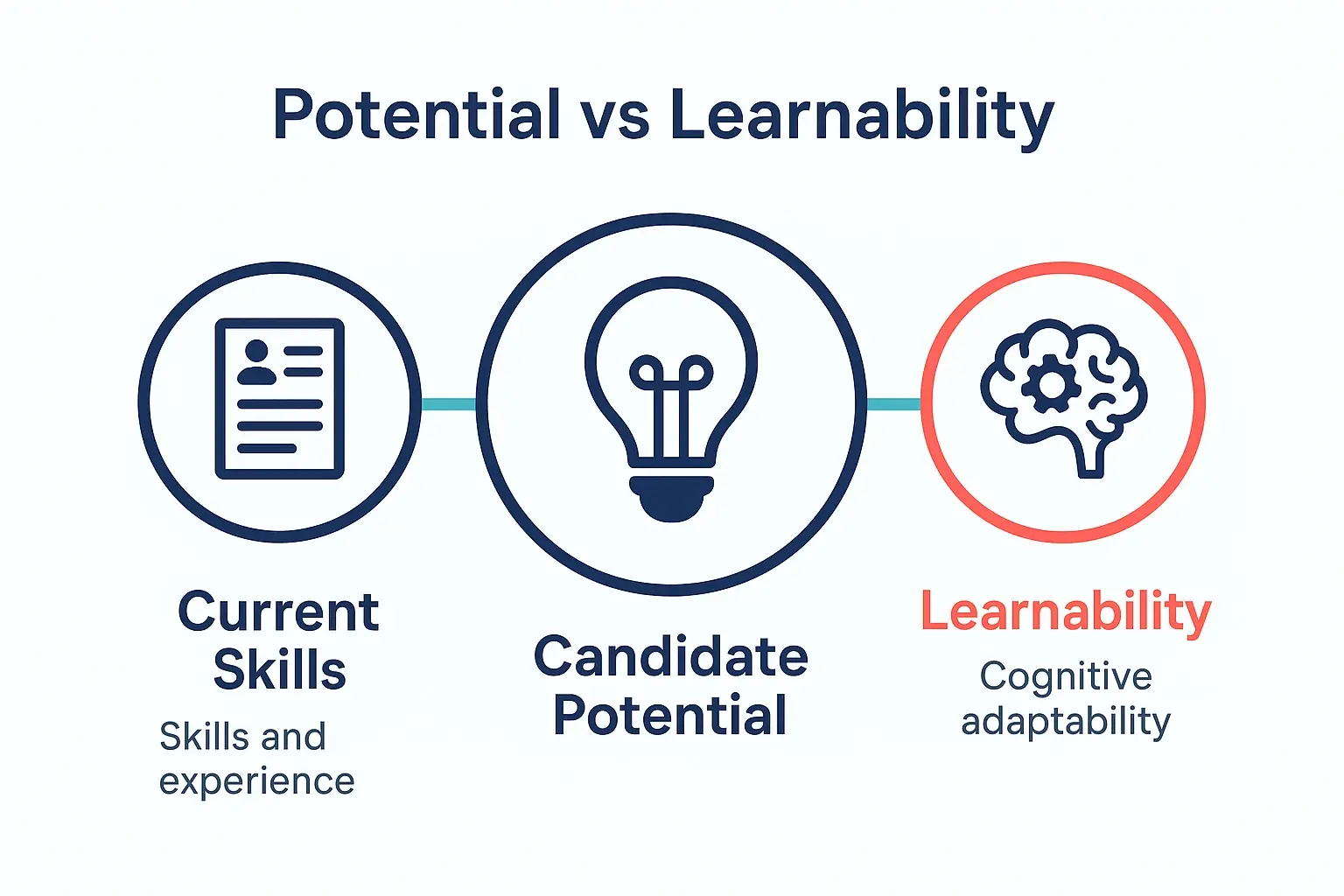
Before we dive in, let’s clear up two often-confused terms. Potential is a candidate’s broad, latent capacity for success. Learnability, however, is more specific and actionable: it’s the measurable ability and willingness to acquire new skills and apply them effectively. Think of it as the engine for turning potential into performance.
Traditional hiring methods are great at spotting existing skills but often miss the underlying indicators of high learnability. This is where AI changes the game.
How AI Uncovers What Resumes Can’t See
Advanced AI platforms go far beyond simple keyword matching. They use sophisticated methodologies to create a richer, more predictive picture of a candidate’s abilities. Instead of just asking, “Do you have this skill?” AI can assess, “How quickly can you develop a new one?”
Here are a few ways it works:
- Adaptive Scenario-Based Assessments: Imagine an interview question that changes based on your answer. AI can present candidates with dynamic problems that adjust in difficulty, revealing not just what they know, but how they think, learn from mistakes, and adapt their strategy in real time.
- Behavioral Pattern Recognition: During an automated interview, AI can analyze a candidate’s problem-solving process. It looks for indicators of cognitive flexibility, curiosity, and a growth mindset—traits that are nearly impossible to glean from a static resume. Advanced platforms, like Upfound AI, use this data to provide a detailed learnability score.
- Multimodal Analysis: By integrating information from conversations, simulations, and problem-solving exercises, AI builds a holistic profile. It identifies patterns that signal a candidate’s capacity to thrive in roles that may not even exist yet.
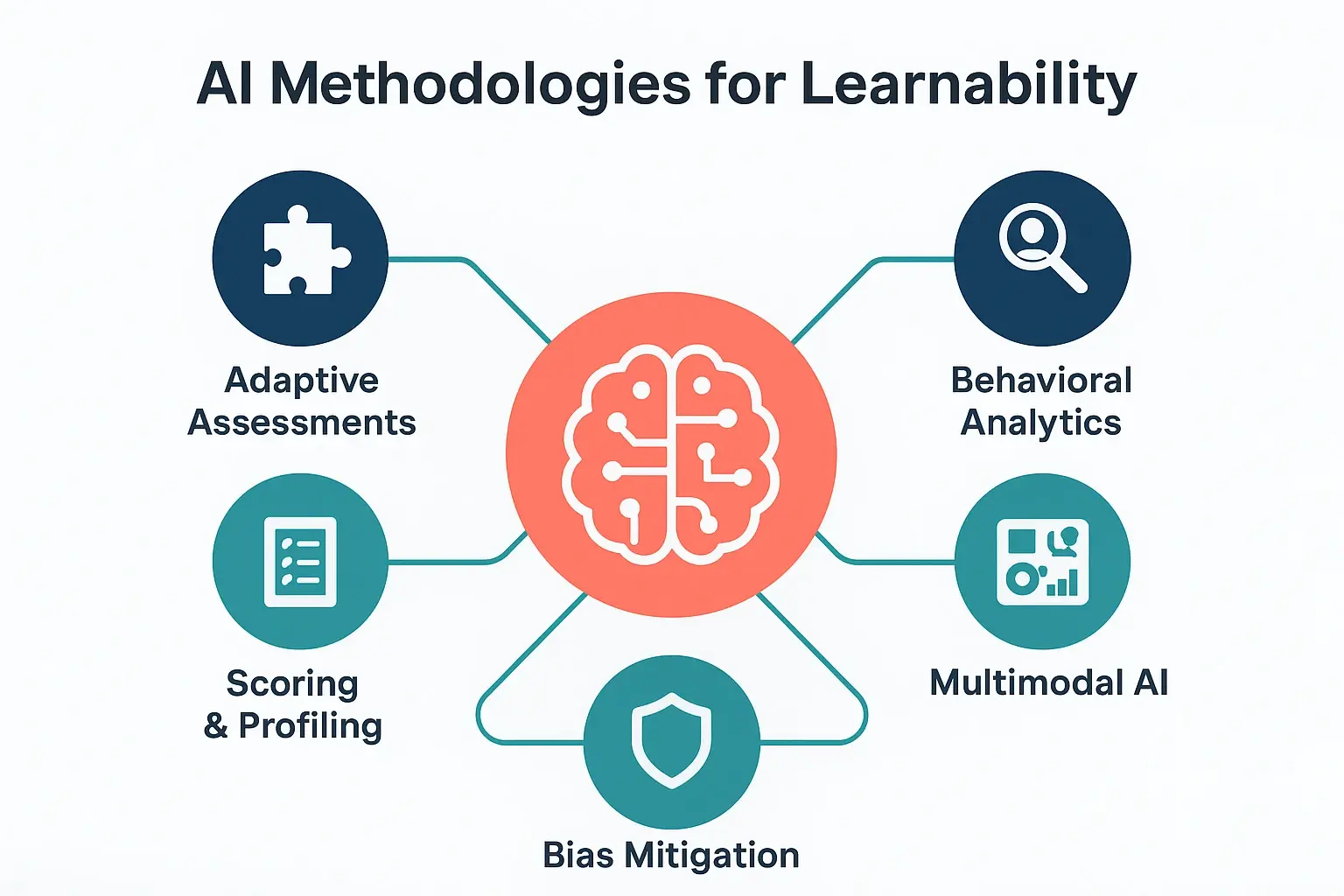
This approach helps you find the “hidden gems”—candidates with non-linear career paths or from diverse backgrounds who possess incredible potential but are often overlooked by traditional screening methods.
The Shift to Smarter, Future-Proof Hiring
Focusing on learnability isn’t just a new tactic; it’s a fundamental shift in hiring strategy. By identifying adaptable talent, organizations can build resilient teams that are prepared for future challenges.
The benefits are clear:
- Higher Retention: Employees who are hired for their ability to grow are more engaged and more likely to stay long-term.
- Increased Agility: Teams full of quick learners can pivot faster, adopting new technologies and workflows with less friction.
- Improved Diversity: Moving beyond rigid skill requirements opens the door to a wider, more diverse talent pool, enriching your company culture and innovation.
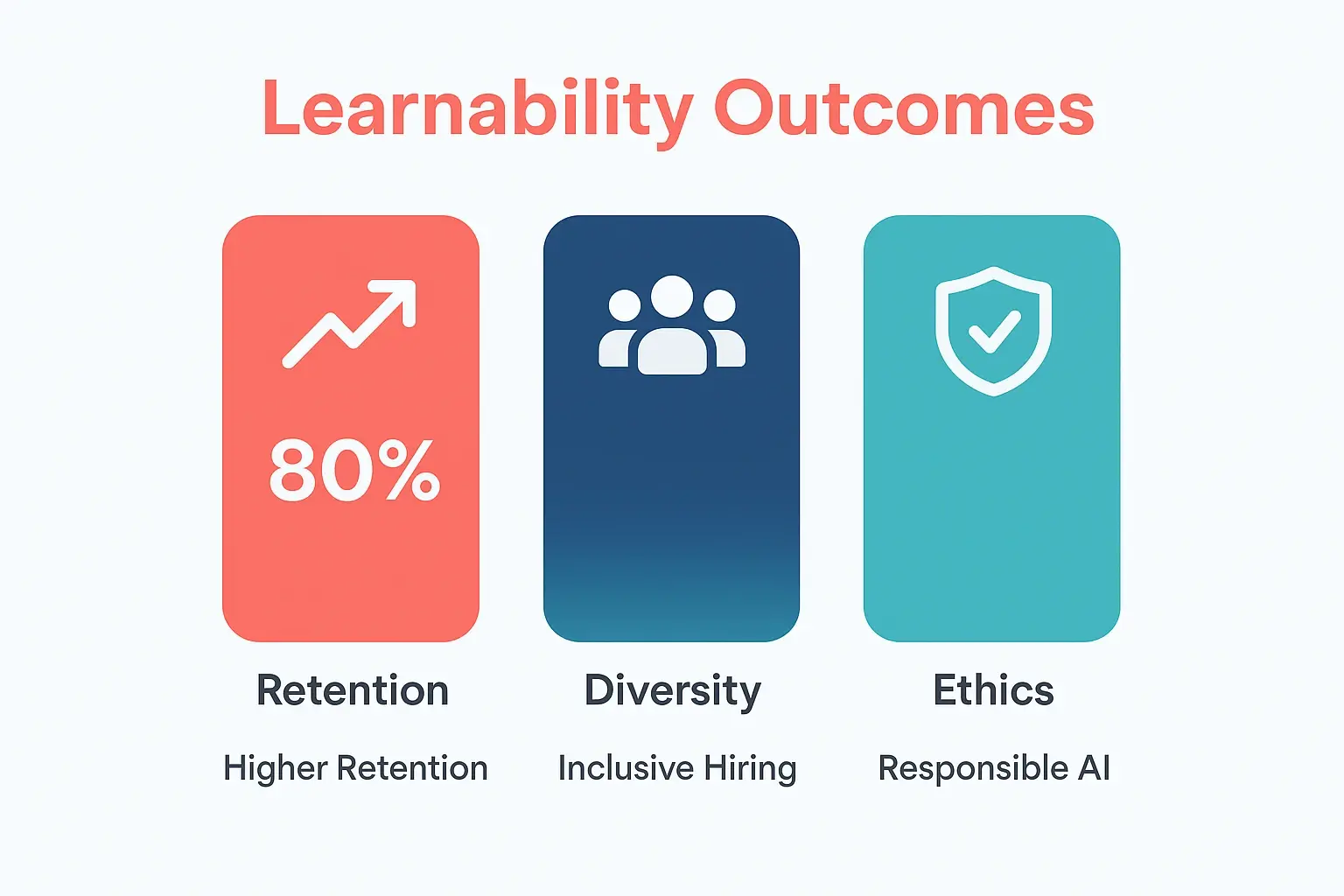
By leveraging AI to look beyond the resume, you’re not just filling a role for today—you’re investing in a talent pipeline for tomorrow.
Frequently Asked Questions
Can AI really measure something as human as learnability?
Yes. Instead of trying to replicate human intuition, AI focuses on objective, measurable behaviors. It analyzes how a candidate approaches new information, solves unfamiliar problems, and adapts to feedback during assessments. This provides consistent, data-backed insights into their capacity for growth.
Does using AI for this create more bias?
Quite the opposite. When designed ethically, AI can significantly reduce human bias. Traditional resume screens often favor candidates from specific schools or companies. By focusing on core competencies like problem-solving and adaptability, AI evaluates every candidate on the same objective criteria, creating a more equitable playing field.
Is this only for technical roles?
Not at all. Learnability is critical across all functions, from sales and marketing to operations and leadership. An adaptable salesperson can quickly learn a new product, while an agile manager can guide their team through organizational change. AI-powered assessments can be tailored to identify the specific learnability traits needed for any role.