From Reactive Scramble to Strategic Advantage: Building Talent Pools with AI Interview Data
Ever feel like recruiting is a constant fire drill? A key role opens up unexpectedly, and the frantic search begins. You post, pray, and sift through hundreds of applications, racing against the clock. This reactive cycle is stressful, inefficient, and often leads to costly hiring mistakes.
What if you could anticipate your hiring needs and have a curated group of high-potential candidates ready before a job even exists? This is the power of a strategic talent pool, and the key to unlocking it lies in data you might be overlooking.
Beyond the Database: What is a Strategic Talent Pool?
Many recruiters have a “talent pool,” but it’s often just a static database of past applicants. A strategic talent pool is different. It is a living ecosystem of engaged, pre-vetted individuals who have the skills and potential to fill not just current, but future roles. It transforms recruiting from a reactive function into a foresight-driven one.
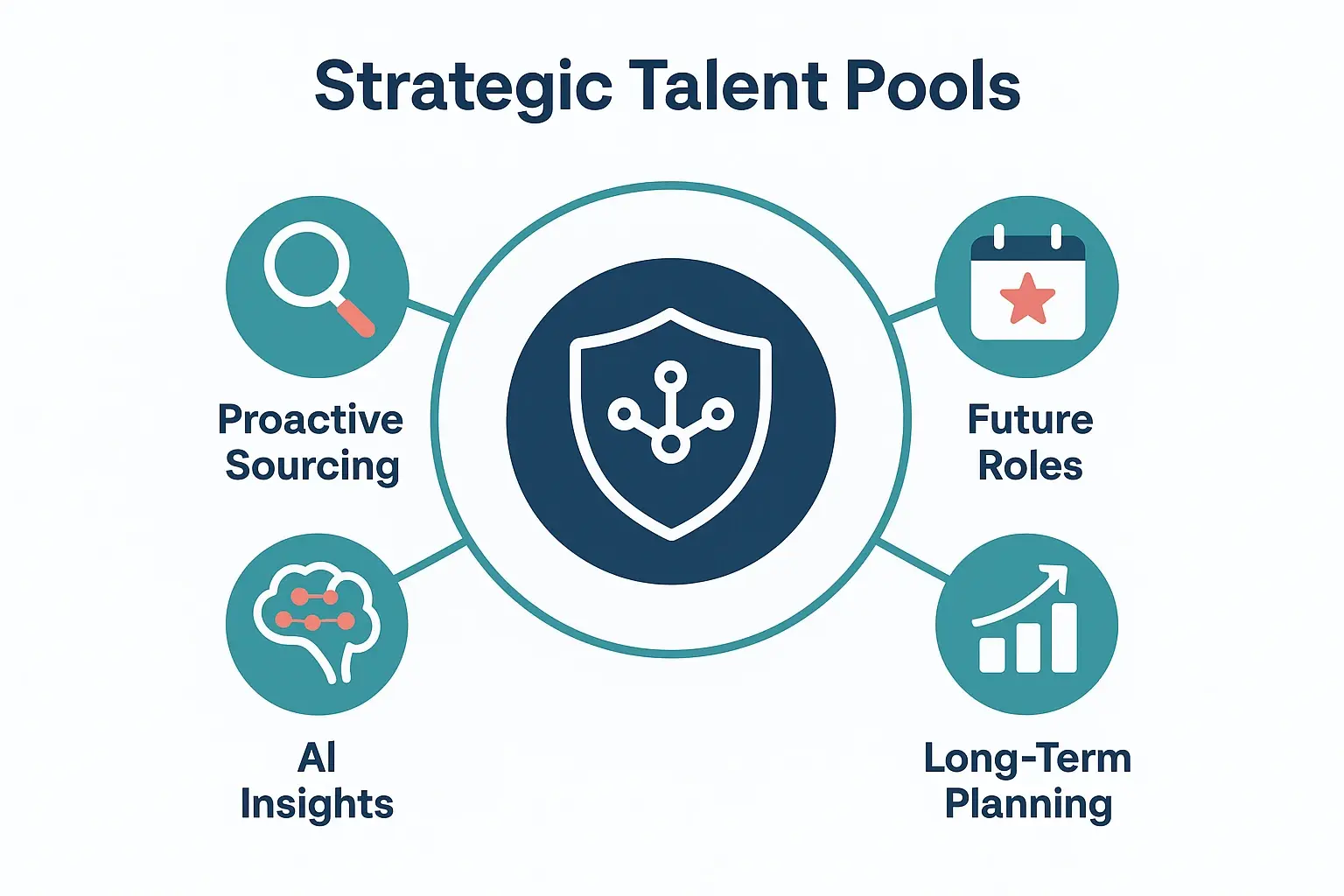
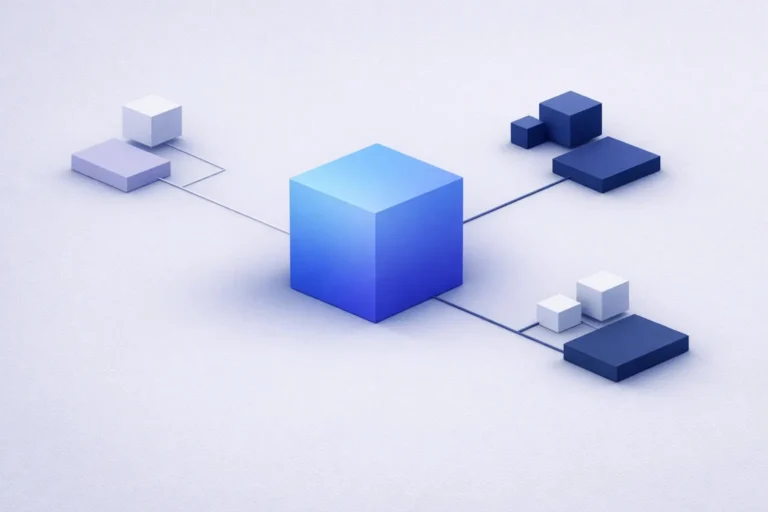
This visual defines strategic talent pools by highlighting key features that differentiate them from traditional talent databases, emphasizing a proactive approach with AI insights for future roles.
The challenge? Building a truly strategic pool requires rich, objective data that goes beyond just a resume. Traditional interview notes are often subjective and inconsistent, making them unreliable for future planning. This is where AI interview data changes the game.
Unlocking “Talent DNA” with AI Interview Insights
AI-powered interviews generate a depth of data that human-led screening calls simply cannot capture at scale. Think of it as mapping each candidate’s unique “Talent DNA.” This includes:
- Quantitative Scores: Objective ratings on key competencies, technical skills, and role-specific knowledge.
- Qualitative Insights: Analysis of communication styles, problem-solving approach, and sentiments.
- Behavioral Patterns: Consistent indicators of traits like collaboration, adaptability, and leadership potential, revealed in how candidates structure their answers.
By analyzing this data across all interviews, you can move beyond simply filling today’s open requirements and start building a powerful, proactive talent strategy.
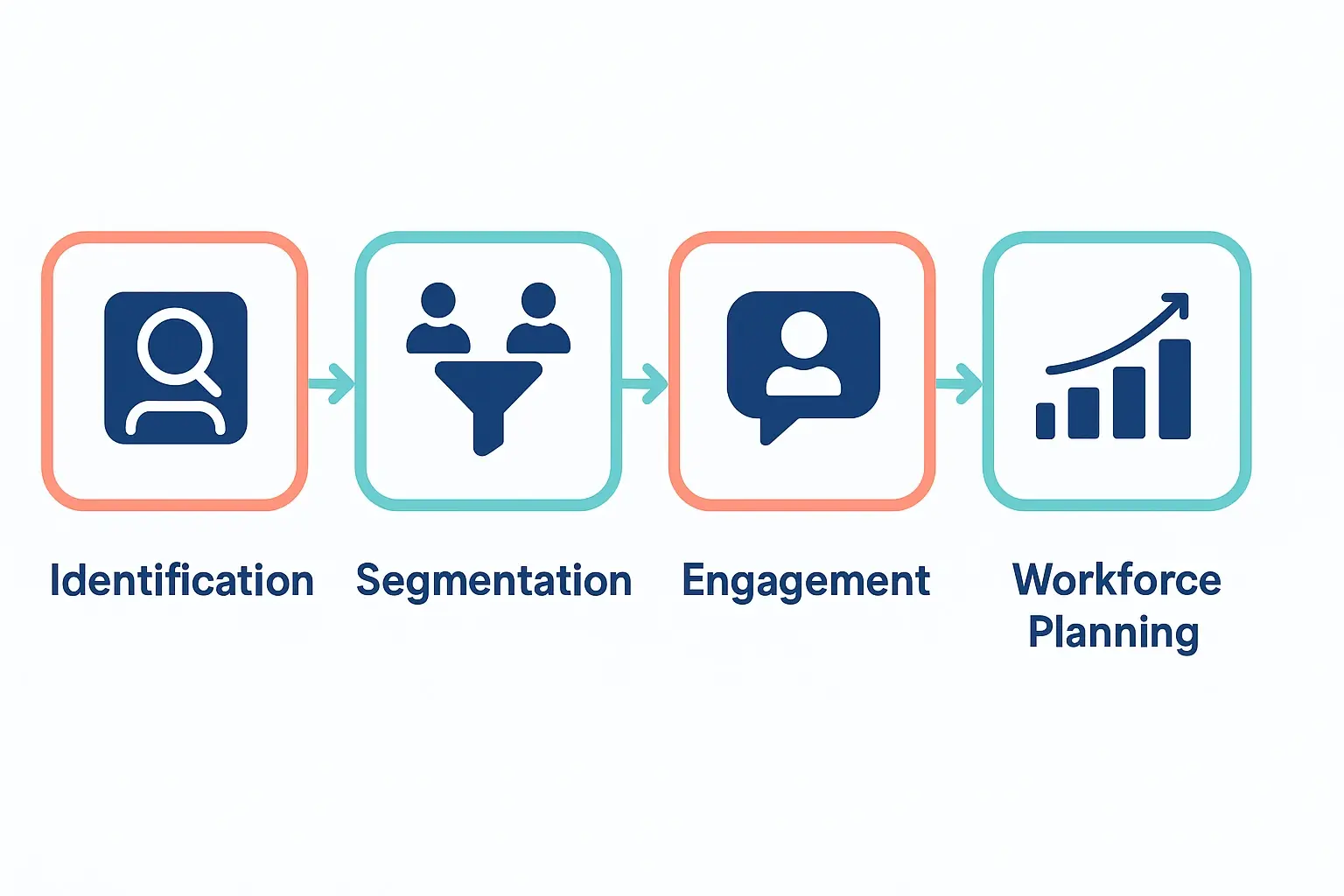
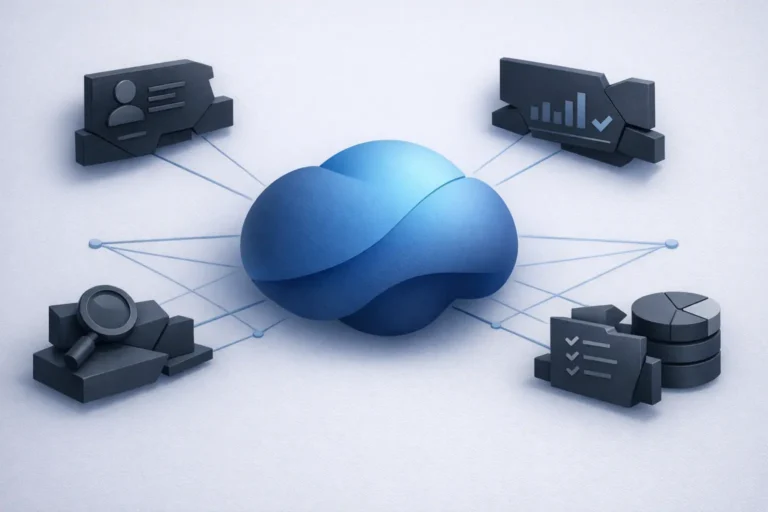
This infographic illustrates the four key steps where AI interview data drives the strategic building and management of talent pools for future hiring.
This process allows you to identify “silver medalist” candidates who were great but not the perfect fit for one role, and intelligently segment them for future opportunities. You can spot individuals with strong skill adjacencies, making them ideal for cross-functional positions you haven’t even designed yet.
The Foundation of Fair Hiring: Responsible AI Talent Pooling
Leveraging AI is powerful, but it must be done responsibly. A primary concern in modern talent acquisition is mitigating unconscious bias. A well-designed AI system built on ethical principles provides consistent, fair evaluations for every candidate, focusing solely on job-relevant criteria.
Building a strategic talent pool with AI requires a commitment to fairness at every stage.
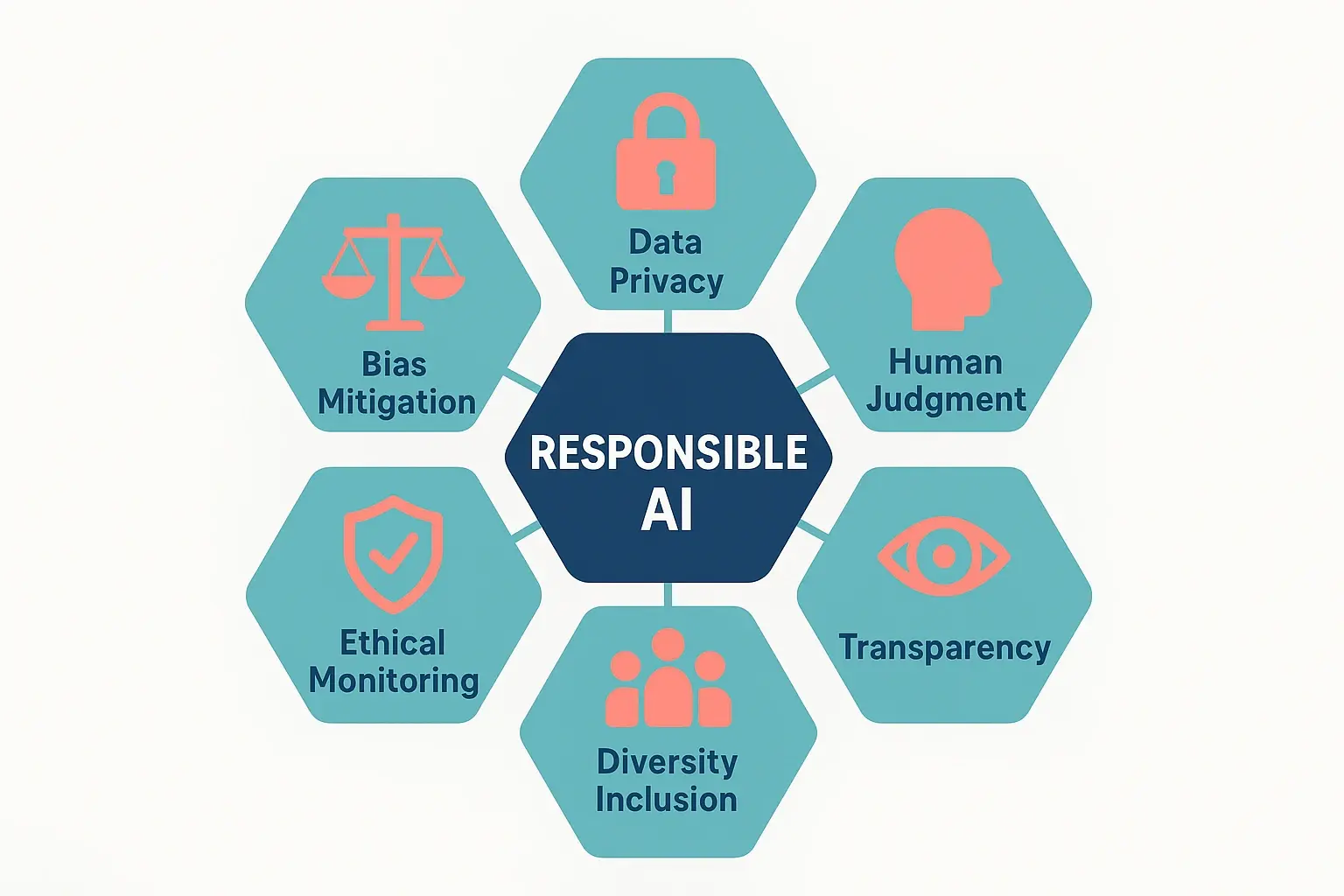
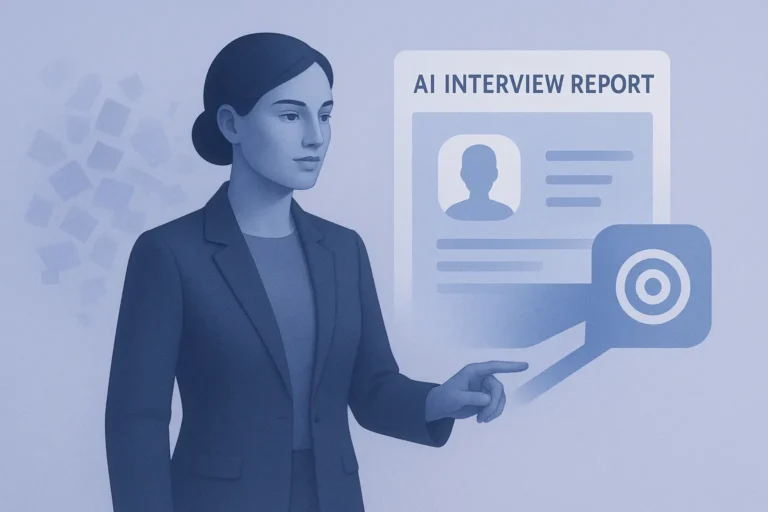
This framework map highlights the essential pillars supporting responsible AI use in strategic talent pooling, emphasizing ethical and fair recruitment practices.
By continuously monitoring for bias and ensuring human oversight, you can build diverse, high-quality talent pools that strengthen your organization and foster an inclusive hiring culture.
Frequently Asked Questions (FAQ)
What is the difference between a talent pool and a talent pipeline?
A talent pool is a broad database of potential candidates who could fit various roles, while a talent pipeline is a more structured set of candidates actively being considered for a specific open position. A strong talent pool feeds your talent pipelines.
Can AI really understand a candidate’s potential for a future role?
AI excels at identifying and scoring concrete skills and behavioral patterns based on interview data. While it doesn’t predict the future, it provides objective insights into a candidate’s current capabilities and demonstrated behaviours, which are strong indicators of potential. This allows you to make data-informed decisions about where they might fit next.
How do I get started with building a strategic talent pool?
Start by identifying high-potential candidates from your past interview cycles. Instead of letting that valuable interview data disappear, use a system that provides detailed reports. Analyze those reports to tag candidates with key skills and competencies, creating the foundation for your first strategic talent segments.
Your Next Chapter in Recruiting
Moving from reactive to proactive recruiting isn’t just about adopting new technology—it’s about adopting a new mindset. By leveraging the rich, objective data from AI interviews, you can stop chasing candidates and start cultivating relationships. You build a strategic asset that fuels your company’s growth, reduces time-to-hire, and gives you a powerful competitive advantage in the war for talent.