Beyond Keywords: How AI Deciphers Niche Technical Skills
Hiring for a “Senior Data Scientist specializing in explainable AI for medical imaging”? If you’re a recruiter, you know the pain. Your inbox fills with resumes that dutifully list “Python” and “Machine Learning,” but you’re left wondering: who actually understands the deep, niche expertise this role demands?
For years, recruiting tech has relied on keyword matching. It was a numbers game—find the resume with the most buzzwords and hope for the best. But for complex technical roles, this approach is like fishing with a net full of holes. You miss the brilliant candidate whose experience is described in terms of project impact, not just keywords, while catching dozens who only have surface-level knowledge. The good news? AI has moved on.
From Keyword Matching to True Understanding
Modern AI doesn’t just count words; it understands context. Think of it as evolving from a simple search engine to a subject matter expert. Instead of just flagging “Kubernetes,” advanced AI can differentiate between a candidate who “has experience with Kubernetes” and one who “architected a multi-cluster Kubernetes environment to improve application resilience by 40%.”
This leap is possible through deep analysis, where AI uses techniques like semantic analysis to grasp the meaning and relationships between words, skills, and project outcomes.
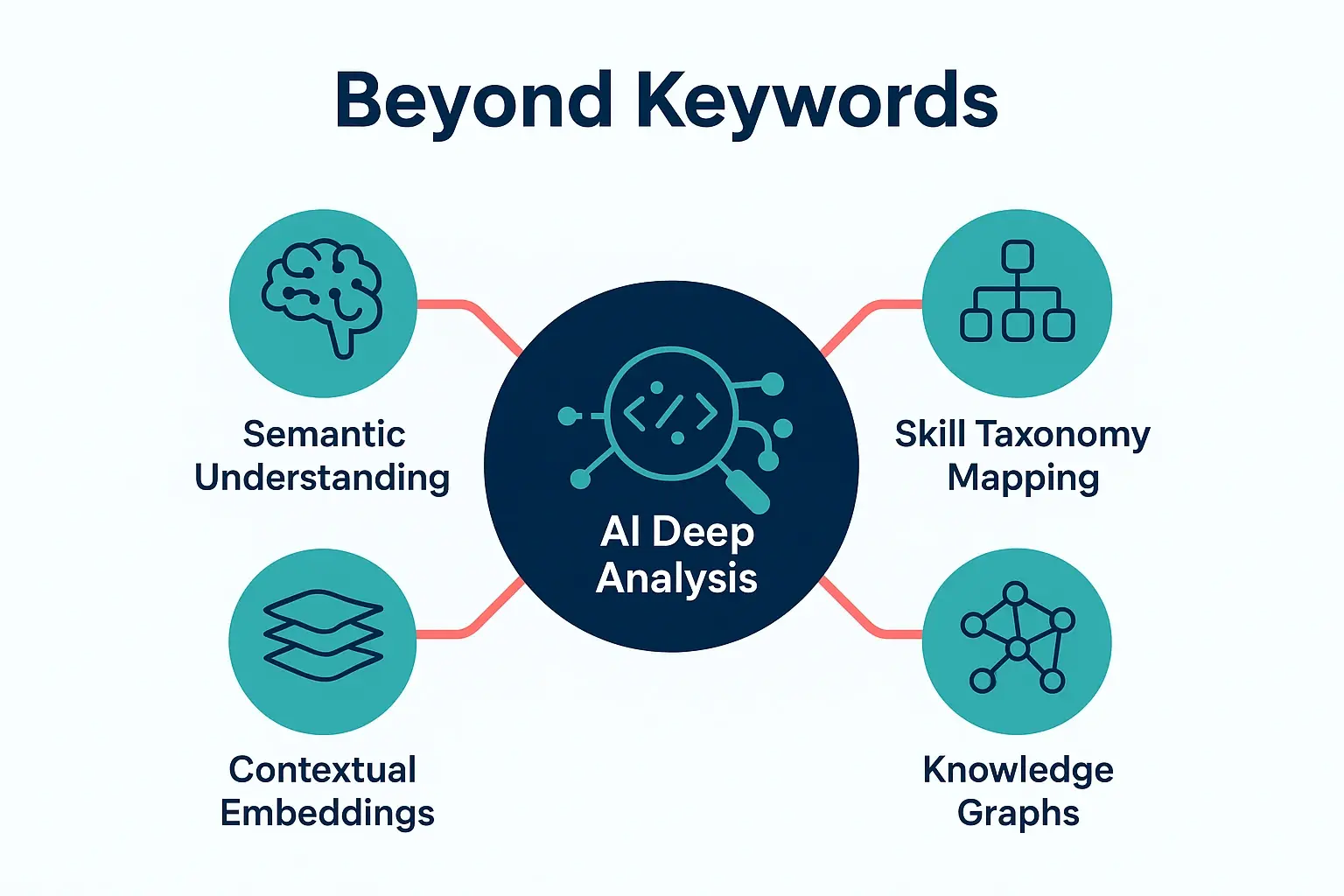
This shift from simple resume screening to deep analysis means AI can now:
- Infer Skill Proficiency: It understands that “architecting” a system implies a deeper skill level than simply “using” a tool.
- Identify Adjacencies: It can recognize that a candidate with deep experience in one advanced framework likely possesses transferable skills for another, even if it’s not listed on their resume.
- Evaluate Project Impact: It moves beyond the what to understand the so what—the actual contribution and complexity of a candidate’s work.
How AI Reads Between the Lines of Project Experience
A candidate’s real value is often buried in their project descriptions. This is where advanced AI truly shines. It doesn’t just see a list of technologies; it deconstructs the narrative to assess the quality and relevance of their experience.
For example, an AI tool can parse a project description from a GitHub repository or portfolio and determine:
- Complexity: Was this a simple bug fix or the development of a core feature from scratch?
- Contribution: Was the candidate a peripheral contributor or a lead architect?
- Relevance: How closely does the problem they solved align with the challenges of the open role?
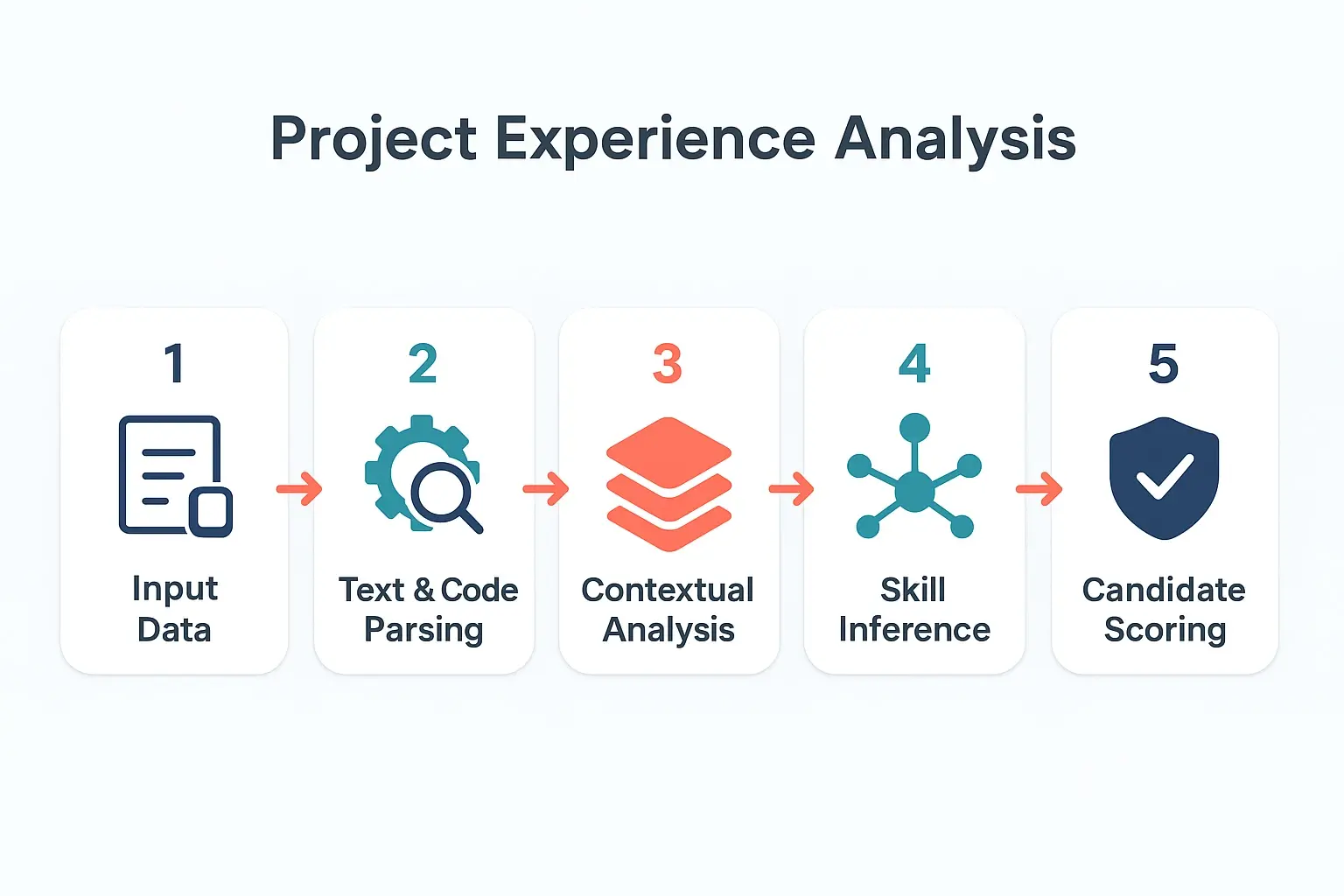
This detailed analysis allows recruiters to quickly surface candidates who have not only the right skills on paper but also the proven, hands-on experience to excel in a highly specialized role.
Bringing Nuanced AI into Your Workflow
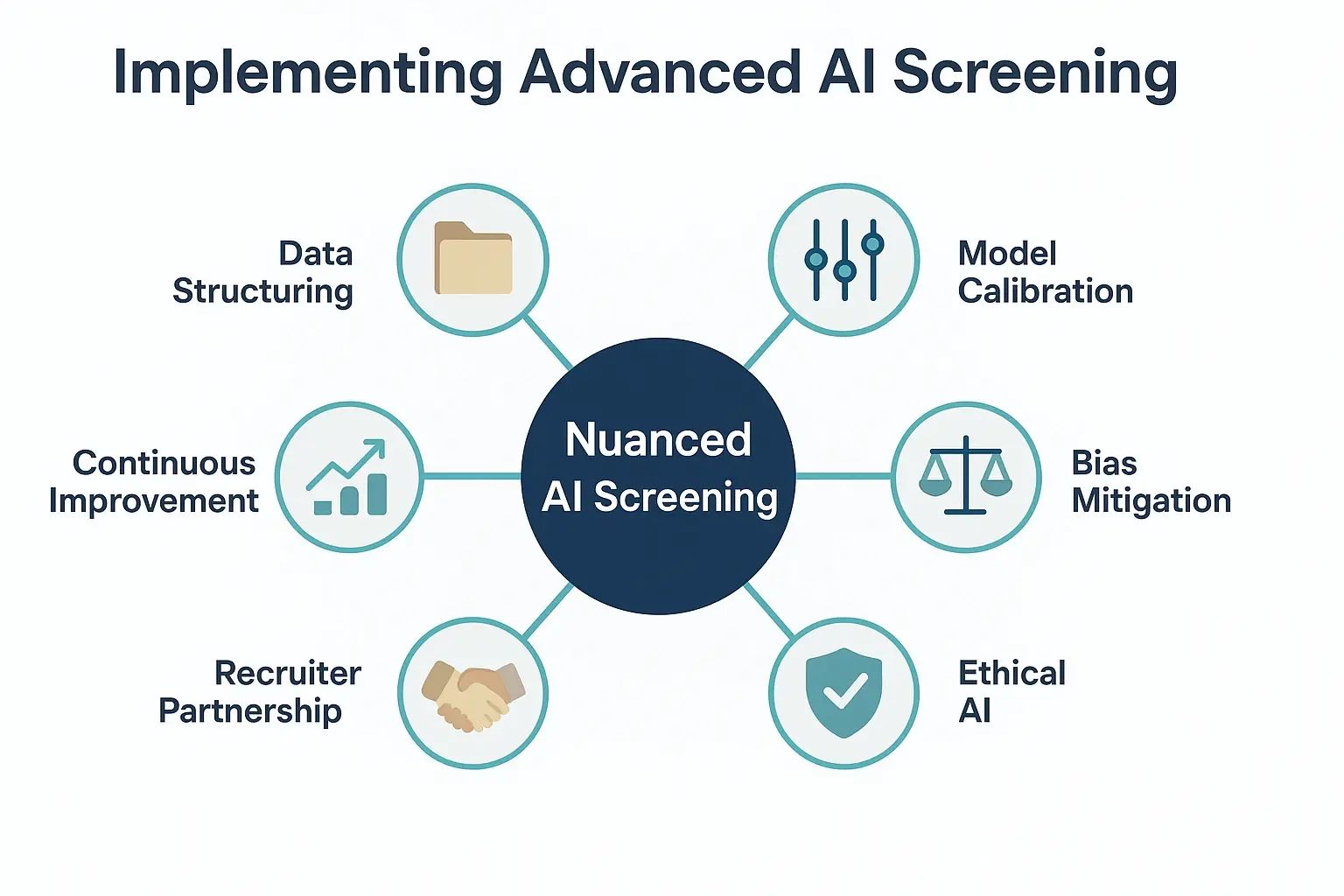
Successfully using this technology isn’t about letting a black box make decisions. It’s about empowering recruiters to make smarter, faster, and fairer ones. The key is to see AI as a partner that handles the heavy lifting of deep analysis, freeing you up for strategic human engagement. This same technology can power automated AI interviews that probe for this nuanced expertise at scale.
For this partnership to work, it’s crucial to ensure the process is transparent and fair, focusing on skills and experience while actively mitigating the human and algorithmic biases that can creep into hiring.
Frequently Asked Questions
### Can AI truly understand complex technical roles?Yes, but only advanced AI systems. While basic tools are limited to keywords, modern platforms use natural language processing (NLP) and machine learning to analyze the context of a candidate’s experience, project contributions, and skill depth, providing a much more nuanced evaluation.
### Is using AI for technical screening fair?When designed responsibly, AI can be fairer than human-only screening. By focusing on objective criteria like demonstrated skills and project complexity, a well-calibrated AI helps remove unconscious biases related to a candidate’s name, background, or alma mater.
The Future is About Deeper Insight
The challenge of hiring for niche technical roles isn’t going away. As technology grows more specialized, the need for tools that can look beyond the surface will only increase. By embracing AI that offers deep, contextual analysis, recruiting teams can stop chasing keywords and start identifying the genuine experts who will drive their organizations forward.
Ready to see how a modern AI recruitment platform can give you deeper insights? Explore how you can build a faster, fairer, and more intelligent hiring process.