Same Goal, Different Rules: Navigating AI Hiring Ethics in Startups vs. Enterprises
Imagine two companies aiming to hire the best talent, faster. One is a fast-growing startup, racing to build its core team. The other is a global enterprise, managing thousands of applications across continents. Both turn to AI for help, but here’s the twist: their ethical challenges aren’t just different in scale; they’re different in nature.
Using AI in hiring isn’t a one-size-fits-all solution. The ethical playbook that works for a massive corporation could be impractical for a startup, and a startup’s agile approach could be dangerously insufficient for an enterprise.
The Core Principles: Your Ethical North Star
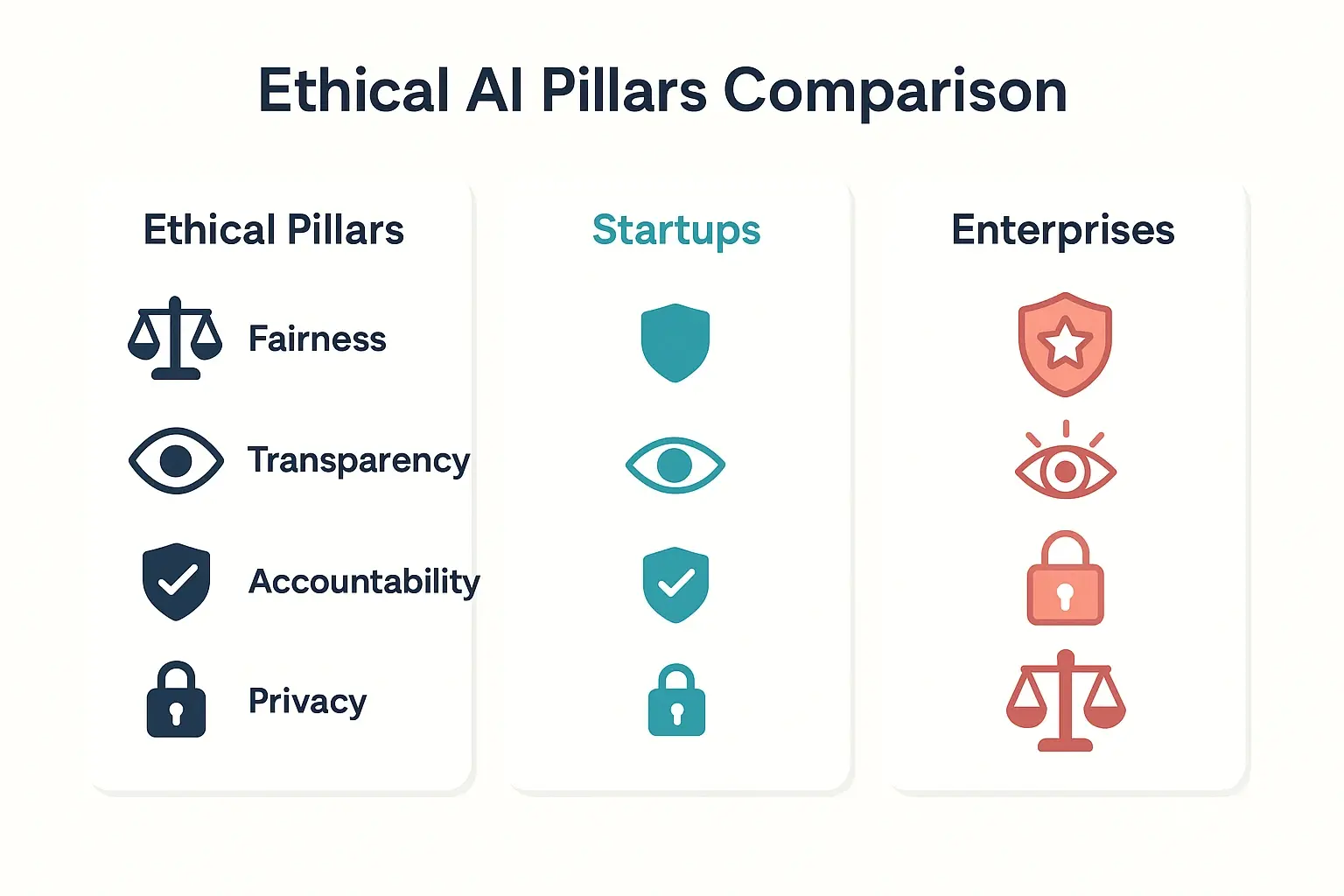
Before diving into the differences, let’s establish the common ground. Any ethical AI recruitment tool, regardless of company size, must be built on four key pillars:
- Fairness: The AI should actively mitigate, not amplify, human bias related to age, gender, race, or other protected characteristics.
- Transparency: You should understand how the AI makes its recommendations. A “black box” system where decisions are a mystery is a major red flag.
- Accountability: Ultimately, humans are responsible. There must be clear human oversight and an appeals process for candidates.
- Privacy: Candidate data must be handled securely and with clear consent, adhering to regulations like GDPR and CCPA.
These principles are non-negotiable. However, how you implement them changes dramatically with scale.
The Startup Dilemma: Speed, Scarcity, and Amplified Risk
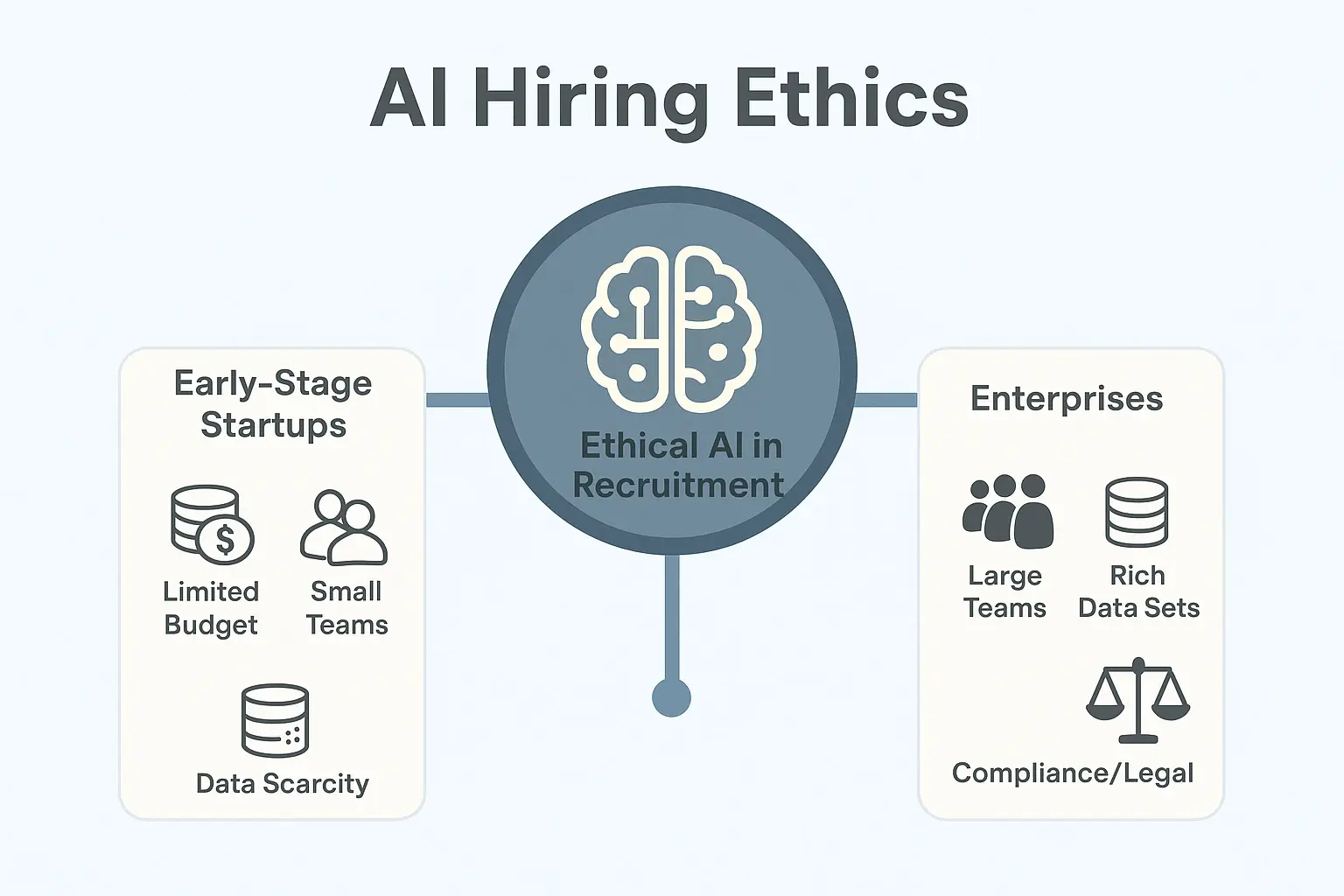
For early-stage startups, the pressure is immense. You need to hire quickly to survive and grow, but you lack the resources of an established company. This creates a unique set of ethical hurdles.
- The Data Scarcity Problem: AI models learn from data. With a small applicant pool, an AI tool might inadvertently learn biases from your first handful of hires. If your first five engineers look the same, the AI might wrongly conclude that’s the “pattern for success,” amplifying bias for all future hires.
- Resource Constraints: You likely don’t have a dedicated legal team or data scientists to audit complex AI systems. This makes choosing a trustworthy, transparent AI partner absolutely critical. The vendor must do the heavy lifting on fairness and compliance.
- The “Move Fast” Mentality: In the race to fill roles, ethics can feel like a speed bump. Startups are vulnerable to adopting tools that promise speed without providing the necessary guardrails for fairness and transparency.
The Enterprise Imperative: Scale, Scrutiny, and Legacy Systems
Enterprises face a different beast. They have the resources but also operate under a microscope, where a single ethical misstep can have massive legal and reputational consequences.
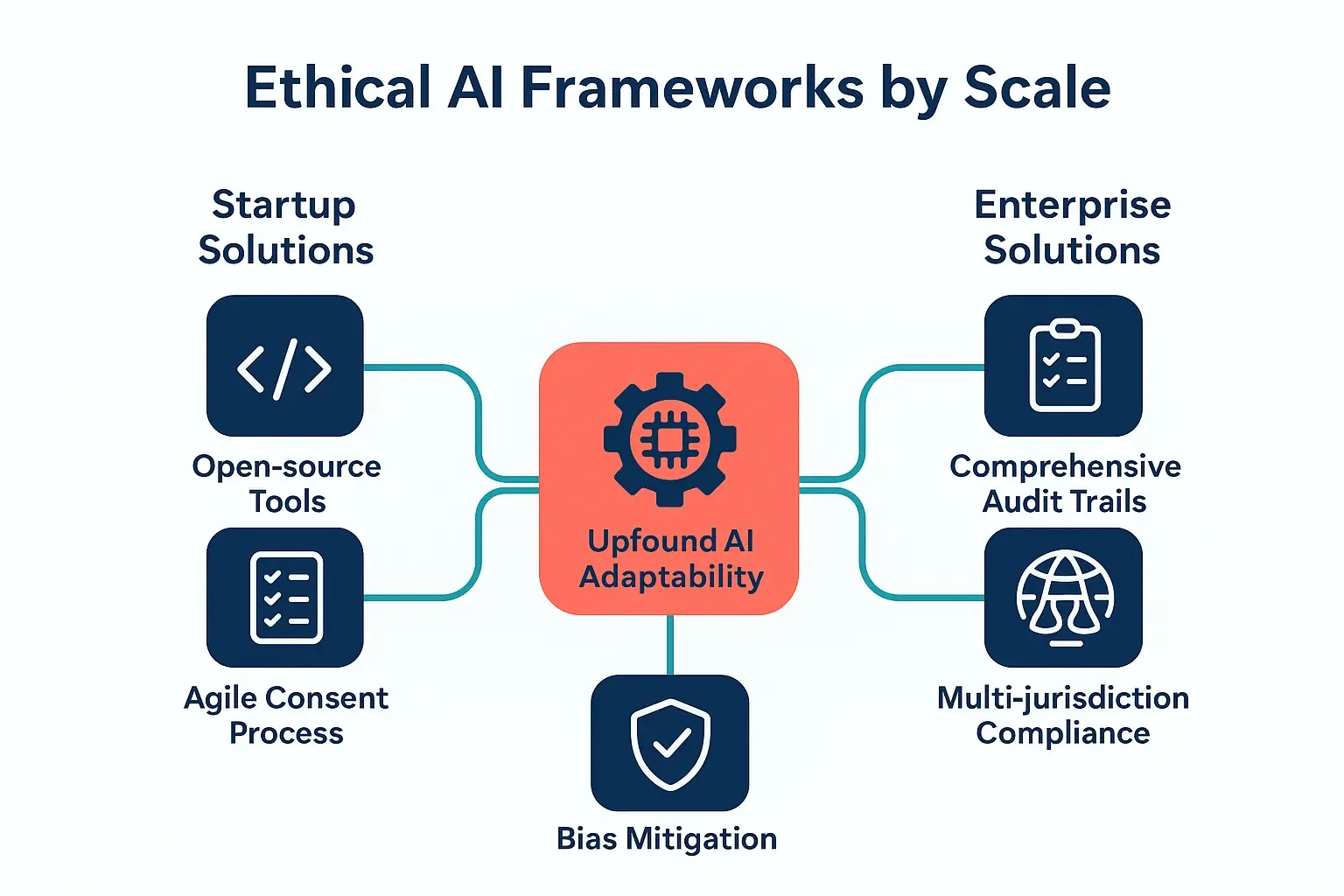
- The Challenge of Scale: Implementing an ethical AI policy consistently across thousands of hires, multiple departments, and different countries is a monumental task. What is compliant in one region may not be in another.
- Legacy Data Bias: Large companies have decades of historical hiring data. If that data reflects past biases, feeding it into a new AI system can simply automate old problems at an unprecedented scale.
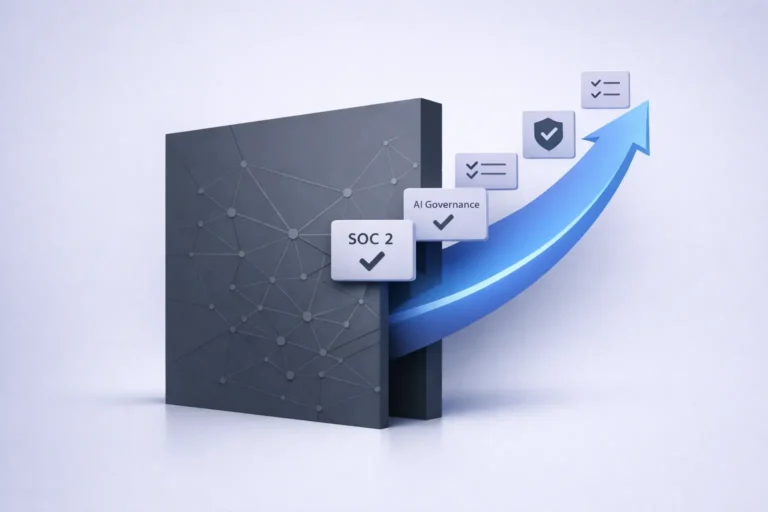
- Complex Compliance: Enterprises must navigate a web of regulations (like EEOC guidelines in the U.S.). Their AI tools must provide robust audit trails and detailed reporting to prove fairness and compliance to regulators.
A Scalable Path to Ethical Hiring
So, how do you move forward? The key is choosing an approach—and tools—that can adapt to your specific context.
- For Startups: Prioritize AI partners that offer out-of-the-box fairness and transparency. Demand to know how their models work and how they mitigate bias. Your agility is an asset—you can build an ethical hiring foundation from day one without fighting legacy systems.
- For Enterprises: Focus on governance and oversight. Establish a cross-functional team (HR, legal, data science) to vet and monitor AI tools. Insist on customizable solutions that can be adapted to different roles and regions, with comprehensive audit logs.
Whether you’re a team of ten or ten thousand, the goal is the same: to build a hiring process that is efficient, effective, and fundamentally fair. The right AI doesn’t just automate tasks; it empowers you to make better, less biased decisions, no matter your size.